
If you still think of Google as the only place people search for a local business, it is time to update that picture. Google itself just admitted as much, and it is why social search optimization, sometimes called SSO, is becoming as important as traditional local SEO for small businesses.
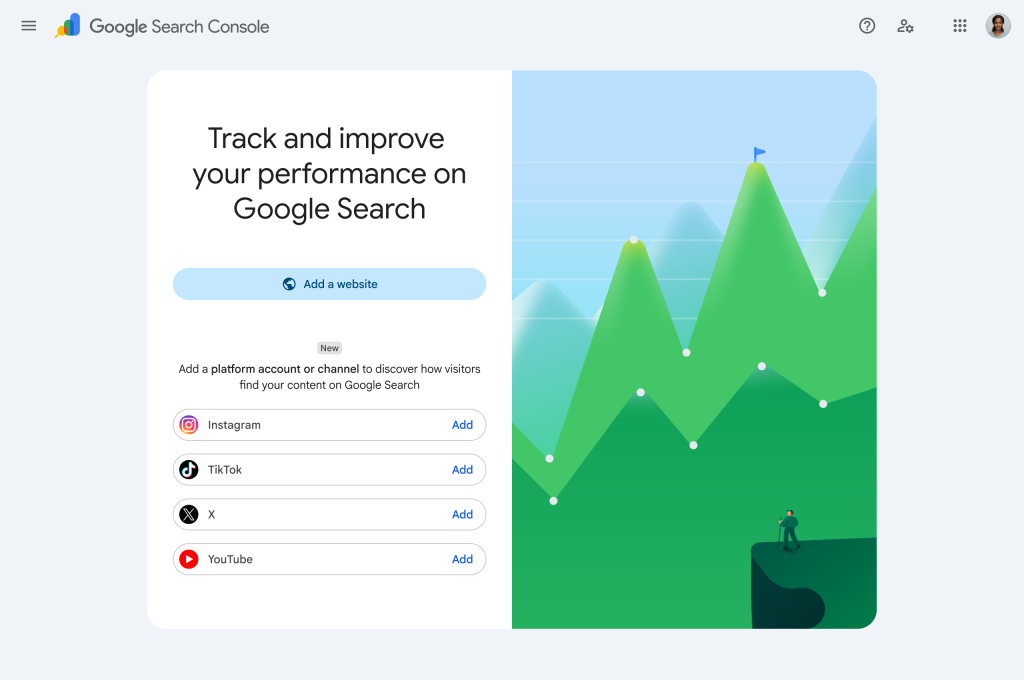
On July 7, 2026, Google announced a new Search Console feature called platform properties. It lets creators and businesses track how their Instagram, TikTok, X, and YouTube posts perform inside Google Search and Discover, even if they do not have their own website. Google is treating social content as a first-class search result, not just a social media post.
For a small business here in Port St. Lucie, Stuart, or Fort Pierce, this is not just a tech headline. It is a signal about where your customers are already looking for you.
What just changed at Google
(Source)
The new Search Console reports show which search terms lead people to a business’s social posts and how those visitors interact with the content. Google is rolling this out gradually, starting with four platforms: Instagram, TikTok, X, and YouTube. It builds on an earlier December 2025 test that first pulled social channel data into Search Console.
The practical takeaway: Google is now measuring and surfacing social content as search traffic, which means it already considers a well-optimized TikTok or Instagram post part of the searchable web, right alongside your website.
How people are actually searching now
(Source)
This shift did not happen overnight. Consumer behavior has been moving toward social platforms as a search tool for a while, and the data backs it up.
Research from Sprout Social shows traditional search engines are still the first stop for about half of all consumers overall, but for Gen Z that lead nearly disappears, with traditional and social search running neck and neck, according to the Q2 2026 Pulse Survey. The same survey found social search is the clear preference for certain categories, restaurants and bars especially, where 38 percent of people search socially first, ahead of Google.
Buffer’s research points to the same shift from a different angle. Its 2026 data on TikTok shows the platform has become a discovery tool for the majority of Gen Z users, who lean on it to find products and stay current on news at rates well above any competing app, according to the TikTok statistics report. People are not opening TikTok to kill time and stumble onto a business. They are actively searching for one.
Put simply: your customers, especially younger ones, are not only Googling to find a business like yours. Many are searching TikTok and Instagram for the same thing and trusting what they find there more than a search engine result or an AI summary.
How AI answer engines surface social content
This is where the AI answer engines (AEO) piece connects directly back to social. AI answer engines are not just reading websites. Grok, built by xAI, is wired into X at a structural level, so it can draw on current, real-time posts from the platform when it answers a question, an advantage most other AI assistants do not share. Ask Grok about a trending topic, and there is a real chance the answer draws straight from recent social posts, not a webpage.
ChatGPT, Perplexity, and Google’s AI Overviews behave differently but land in a similar place. Analysis from AI search platform ZipTie found that Reddit alone shows up in roughly 93% of AI search citation opportunities across these tools, according to the 2026 AI search citations research, citing data from Semrush. The pattern these engines favor is specific: real, conversational, question-and-answer content written by an actual person, not a polished corporate page.
A genuinely useful social post, a comment thread, or a caption that answers a real customer question is not just competing for likes. It is a candidate for the exact kind of source material AI answer engines are already choosing to cite.
What we found when we checked the Treasure Coast
To see how this plays out locally, we ran our own informal check of social search results for a service business topic tied to the Treasure Coast.
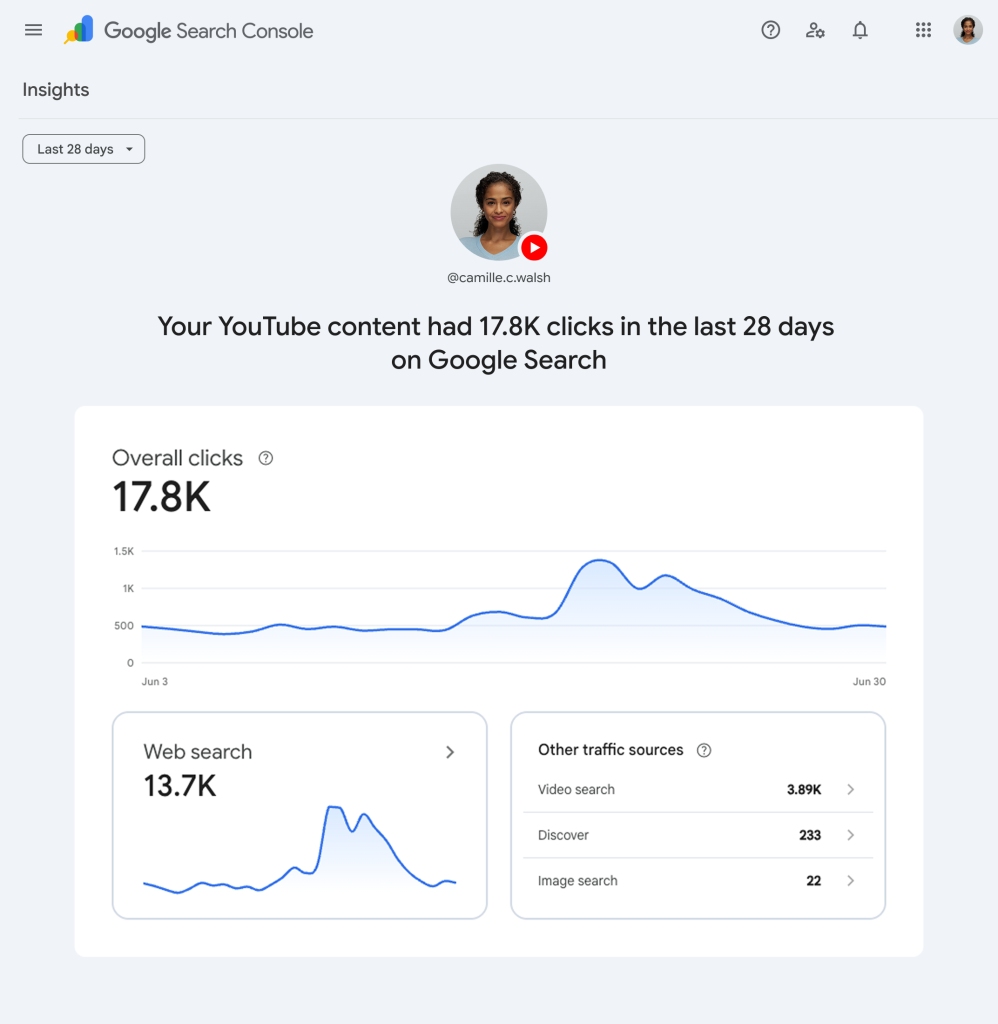
Here’s one HVAC company posting about concerning conditions inside an AC unit. Google’s Performance report already tracks total clicks and impressions for each connected account, filterable down to individual posts and the specific queries driving traffic to them. As Cooling with Connelly’s keeps posting, that data is what would show whether their local hashtags are actually pulling in search traffic.
Most small businesses on the Treasure Coast have not caught on to social search yet, in any industry. The ones that show up now, while the space is still open, get a head start that gets harder to close later.
Aligning one article with a social search strategy
The businesses that will win at social search are not the ones creating two separate content plans, one for the blog and one for social. They are the ones getting more out of the work they already do.
Here is what that looks like in practice for a small business. Say a local business owner writes a single, genuinely useful article for their website answering one specific customer question, something like what to check before calling for a repair, or what to expect at a first appointment. That article already did the hard work: it identified a real question, researched the honest answer, and organized it clearly.
From there, that one article can become several pieces of social content instead of one:
- A 30 to 60 second video walking through the two or three most useful points from the article, filmed on a phone, posted to TikTok and Instagram Reels with local hashtags
- A short carousel post breaking the article into three or four slides, each one answering a piece of the original question
- A quick “did you know” style clip pulling out the single most surprising or useful fact from the article, since that is the kind of specific, honest detail social search users respond to
- A pinned comment or caption linking back to the full article for anyone who wants the complete answer
The article and the social posts are not competing with each other. The article builds authority with Google and AI answer engines. The short posts put the same expertise in front of people searching TikTok and Instagram, in the format those platforms actually reward. One piece of real research, told three or four different ways, across the places customers are already searching.
What this means for your business
A few practical implications follow from all of this.
First, your Google Business Profile and website are no longer the only places worth optimizing. A short, useful video answering a real customer question, posted with local hashtags, is now a search asset in its own right.
Pro tip: Check out the questions or concerns in your Google Reviews, and your inbox too. These are great topics to create articles and videos from.
Second, this reinforces something we already believe about answer engine optimization. Whether the answer engine is Gemini, ChatGPT, or the TikTok search bar, the winning content answers a specific question clearly and honestly. Generic brand content does not perform well in any of these systems.
Third, Google measuring social performance inside Search Console means this channel is about to get more competitive, not less. Right now there is a window where a Treasure Coast business willing to post consistently can be one of the only real local answers in social search for its category.
Where PeakHippo comes in

This is exactly the gap PeakHippo was built to close for small businesses on the Treasure Coast. Local SEO, answer engine optimization, and social search optimization are really the same underlying job: making sure your business is the clear, honest answer wherever someone is searching, whether that search happens on Google, an AI answer engine, or a social platform’s own search bar.
Most local business owners do not have the time to write a genuinely useful article and then figure out how to turn it into a week of social posts on top of running the business. That is the work we take off your plate. We build the content strategy first, the research, the local search targeting, and the actual article, so it holds up with Google and with AI answer engines. Then we repurpose that same article into the short posts, captions, and clips your social accounts need, so your website and your social presence are pulling from the same well instead of running as two disconnected efforts.
You do not need to become a content creator to show up in social search. You need one partner handling the strategy end to end, from the original research to the caption that goes out on Instagram. Get a free SEO audit to see how you can become discoverable for more customers today.
FAQs
What is a Search Console platform property?
It is a new property type in Google Search Console that lets a business or creator monitor how their Instagram, TikTok, X, or YouTube posts perform in Google Search and Discover, including which search terms drive traffic to those posts.
Is social search actually replacing Google for local businesses?
Not yet, and not for everyone. Traditional search is still the first choice for about half of consumers overall. But for younger customers and for certain categories like restaurants, social search is already the preferred starting point, and Google is now formally tracking that behavior as search performance.
Which platforms are included in Google’s new feature?
Instagram, TikTok, X, and YouTube, with Google rolling the feature out gradually over several weeks.
What should a local business actually do about this?
Start showing up with genuinely useful, locally tagged content on the platforms your customers already search. Answer real customer questions the way you would in a Google featured snippet, just in video or short post form. Being one of the few local voices in a category right now is worth more than waiting until every competitor is doing it.